Every learning leader knows the value of running great programs. But when it comes to securing budget, proving impact, and aligning to business priorities, it’s not the program itself that speaks—it’s the data behind it.
The challenge? Too many L&D teams track the wrong information, or worse, collect data inconsistently across projects. By focusing on the right metadata, learning leaders can transform how they plan, measure, and communicate value—not just within their teams, but across the business.
What Do We Mean by “Project Metadata”?
Think of project metadata as the core attributes that describe every learning initiative. Beyond the obvious (title, owner, due date), metadata tells a richer story:
- Business Alignment – Which strategic priority or KPI the project supports
- Audience & Reach – Who the program serves, how many learners, and what roles
- Resources & Capacity – Estimated vs. actual hours, team members involved, budget allocation
- Delivery & Modality – How the learning is being delivered (e.g., instructor-led, virtual, blended)
- Expected Outcomes – Desired business results or behavioral changes tied to the program
This structured layer of data creates a common language between L&D and the business.
Why It Matters: Beyond L&D
Tracking the right metadata does more than tidy up your operations—it fuels decisions at every level:
- For L&D Leaders: Visibility into workload, resource gaps, and pipeline prioritization.
- For Executives: A clear picture of how investments in learning map directly to strategic goals.
- For Finance & Operations: Evidence to support budgeting, capacity planning, and vendor optimization.
- For Business Stakeholders: Confidence that their requests are being tracked, aligned, and delivered with measurable outcomes.
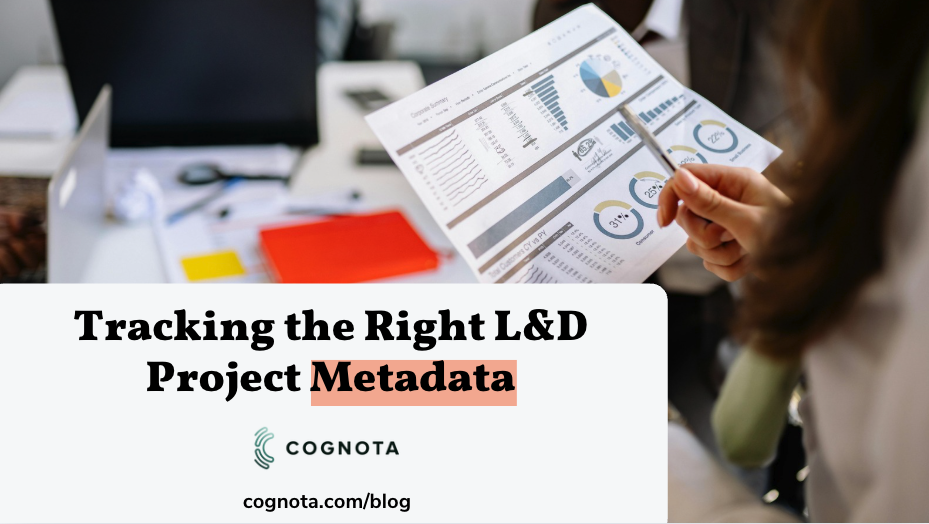
When metadata is consistent, reporting stops being an afterthought and becomes a real-time dashboard of value creation.
Three Ways Metadata Drives Impact
1. Improved Decision-Making
With accurate resource and outcome data, leaders can say “yes” to the right projects and “not now” to others—reducing wasted effort.
2. Faster Alignment with the Business
Tagging every project to a business objective ensures the L&D team can show executives exactly where their dollars and hours are going.
3. Better Storytelling with Data
Instead of reporting on completions or smile sheets, L&D can highlight projects that moved the needle on sales performance, reduced onboarding time, or improved retention—because the metadata is already captured.
Getting Started: A Simple Framework
When setting up custom fields and project templates in Cognota, start with a minimum set of metadata fields. Here’s a practical foundation:
- Strategic Goal – Which corporate initiative this project supports
- Primary Audience – Department, role, or level
- Estimated Hours & Budget – Forecast vs. actuals
- Delivery Method – Online, instructor-led, hybrid
- Expected Business Outcome – Reduce cost, increase revenue, improve performance, etc.
Over time, you can expand into more advanced fields (e.g., ROI measures, AI-generated effort estimates, vendor usage).
Metadata isn’t just about tracking—it’s about translating L&D’s work into the language of the business. By capturing and standardizing the right attributes across every project, L&D leaders shift from reactive service providers to strategic partners who can demonstrate impact, forecast demand, and contribute directly to business growth.
Want to see how leading organizations are using Cognota to track the right project metadata and turn data into decisions? Reach out to your Customer Success Manager or our Support team at support@cognota.com