
If your learning team is juggling intake requests in email, tracking timelines in spreadsheets, and trying to explain missed deadlines in quarterly reviews, the problem is not effort. It is operations. That is why l&d project management has become a defining capability for enterprise learning teams under pressure to deliver more, faster, and with clearer business impact.
For many organizations, project management in L&D still looks informal. A stakeholder requests a program. A designer starts scoping. A manager reshuffles priorities. Finance asks for budget visibility halfway through. Everyone is busy, but very little is consistently governed. The result is familiar: duplicated work, hidden dependencies, unclear ownership, and a backlog that never really moves.
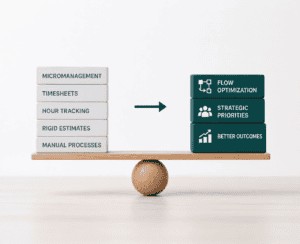
The teams that break this cycle do not simply manage projects better. They operate learning with more discipline. That distinction matters because enterprise L&D is not running one project at a time. It is managing a portfolio of initiatives, requests, resources, vendors, budgets, and business expectations all at once.
What l&d project management really means
In enterprise environments, l&d project management is not just scheduling tasks and setting due dates. It is the operational system that connects learning demand to business priorities, available capacity, execution workflows, and measurable outcomes.
That means the work starts before design begins. It starts with intake. What is being requested, by whom, for which business need, and with what urgency? Without a defined intake process, teams inherit work instead of prioritizing it. They become reactive by default.
From there, project management extends into planning, stakeholder governance, resource allocation, budget tracking, risk management, and reporting. It also requires clarity on what success looks like. A project delivered on time but disconnected from a business objective is still an operational miss.
This is where many learning functions run into trouble. They may have strong instructional talent, committed business partners, and a healthy demand for learning. But without a reliable operating layer, execution becomes inconsistent. Good work gets buried under preventable friction.
Why enterprise learning teams struggle with project management
The challenge is not that L&D leaders do not understand project management. It is that most enterprise learning teams were not built with an operations model designed for scale.
Requests come from every direction. Priorities shift with new regulations, product launches, leadership changes, and workforce transformations. Teams often work across business units with different expectations, different timelines, and different definitions of urgency. Meanwhile, the systems supporting the work are fragmented.
One team tracks intake in a form. Another uses shared documents. Budget owners keep separate files. Project plans live in a project management system that only part of the team updates. Reporting is manual, which means it is delayed, incomplete, or both.
That fragmentation creates a false sense of progress. Work is happening, but leaders cannot see the full picture. They do not know where capacity is constrained, which projects are at risk, or whether high-effort requests are tied to high-value outcomes.
This is also why the common response – hire more people or buy another point solution – does not always fix the issue. More capacity helps, but only if the work is entering the system in a disciplined way. More tools help, but only if they create a single operational reality rather than another layer of administrative work.
L&D project management as an operating discipline
The most effective learning organizations treat project management as part of a broader operating model. At Cognota, that perspective is reflected in the LearnOps framework: Align, Plan, Execute, Measure, Optimize. It is useful because it shifts the conversation from task management to operational maturity.
Alignment comes first. Before a project is approved, there should be a clear connection between the request and a business need. This sounds obvious, but in practice it is often skipped. When every request is treated as equally valid, teams lose strategic control.
Planning is where many bottlenecks become visible. Do you have the internal capacity to deliver the work? Are subject matter experts actually available when needed? Is outside support required? Strong planning does not eliminate trade-offs. It makes them visible early, while there is still time to make informed decisions.
Execution is the part most teams focus on, but it works best when alignment and planning are already in place. Clear workflows, defined ownership, stage gates, and realistic timelines reduce rework and help stakeholders understand their role in delivery.
Measurement matters because project success is not just completion. Enterprise leaders need to understand throughput, cycle time, utilization, budget variance, and business impact. Not every metric belongs in every conversation, but leaders should not have to piece together operational data manually.
Optimization is what separates teams that stay stuck from teams that improve over time. Which request types create the most churn? Where do approvals stall? Which teams consume disproportionate capacity? Without this view, project management becomes maintenance instead of improvement.
What good looks like in practice
Strong l&d project management does not feel bureaucratic. It feels clear.
Stakeholders know how to submit work and what information is required. L&D leaders can assess requests against agreed criteria instead of relying on whoever asks loudest. Teams understand who owns each phase of delivery. Resource plans reflect actual availability, not ideal assumptions.
Just as important, leaders can see work across the portfolio. They know what is active, what is waiting, what is blocked, and what should not move forward yet. That visibility changes the quality of decision-making.
It also improves the relationship between L&D and the business. When learning teams can explain trade-offs with data, conversations become more strategic. Instead of saying, “We are overwhelmed,” they can say, “We can support these three initiatives this quarter based on current capacity, and this fourth request would require reprioritization or additional support.” That is a different level of operational credibility.
The maturity gap most teams are feeling
Many enterprise teams are operating in a gap between demand and discipline. They are expected to support transformation, compliance, enablement, leadership development, and change initiatives, but they are still managing the work with fragmented processes.
This is where maturity matters. In a reactive environment, work is driven by urgent requests and individual heroics. In a managed environment, there is more consistency, but reporting and prioritization may still be limited. Strategic teams connect learning operations to business priorities. More advanced teams can predict capacity constraints and adapt faster because they have the data and governance to do it.
There is no single right endpoint for every organization. A heavily regulated healthcare company may need tighter governance than a fast-moving business unit in another industry. A centralized learning function will structure intake differently than a federated one. But every enterprise team benefits from moving away from ad hoc project execution toward a more deliberate operating model.
How to improve l&d project management without overengineering it
The best next step is usually not a wholesale process redesign. It is identifying where operational friction is costing the team the most.
For some organizations, the biggest issue is intake. Too many requests enter the system with too little context. For others, the bottleneck is planning. Teams commit to work before understanding resource constraints or stakeholder dependencies. In other cases, execution is where projects break down because ownership is vague and status reporting is inconsistent.
A practical starting point is to standardize three things: how work enters the team, how priorities are evaluated, and how capacity is reviewed. Those three decisions affect almost everything downstream.
From there, create a shared view of active work across the portfolio. Not just deadlines, but effort, owners, blockers, and business purpose. If senior leaders cannot answer what the team is working on and why, project management is still too opaque.
Finally, measure a small set of operational indicators consistently. Cycle time, workload by role, intake volume, and completion trends can reveal more than anecdotal status updates ever will. The point is not reporting for its own sake. The point is making better decisions with less guesswork.
Enterprise L&D does not need more heroics. It needs systems that support better judgment, clearer execution, and more credible conversations with the business. When l&d project management is treated as an operational discipline rather than an administrative afterthought, learning teams gain what they need most: capacity, execution, and intelligence to scale their impact.